

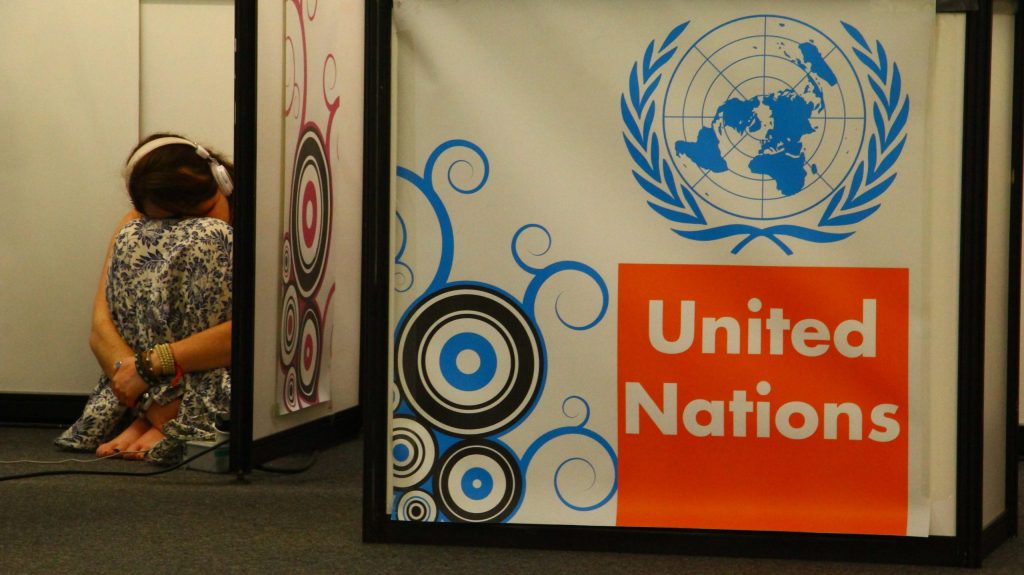
In June governments of the world will gather in Brazil for the Rio+20 United Nations Conference on Sustainable Development. They are expected to agree on a declaration that should address and propose solutions to the multiple crises the world is facing on issues such as energy, food, climate and finance.
However, what Friends of the Earth sees coming out of the preparations for the conference causes us to be very concerned about the growing influence of major corporations and business lobby groups within the UN. Increasingly we see UN policies that do not serve the public interest but instead support the commercial interests of companies or business sectors.
The ‘Zero Draft’ of the Rio+20 Declaration highlights the role of business as promoter of the so-called ‘green economy’ and advocates market-based mechanisms that primarily benefit business, while failing to hold business accountable for its role in creating the financial, climate, food and other crises.
To reclaim the UN from corporate capture, Friends of the Earth International, La Via Campesina, Jubilee South/Americas, The Transnational Institute, Third World Network, Corporate Europe Observatory, World March of Women, Polaris Institute, The Council of Canadians, and Peace and Justice in Latin America/SERPAJAL have prepared a statement that we will present to the UN at the Rio+20 summit in June.
We are inviting as many Civil Society Organisations as possible to sign the statement, demanding to stop the corporate capture of the UN and reclaim the UN as a peoples’ space.
Read the statement here.
Civil society organisations can sign the statement here.