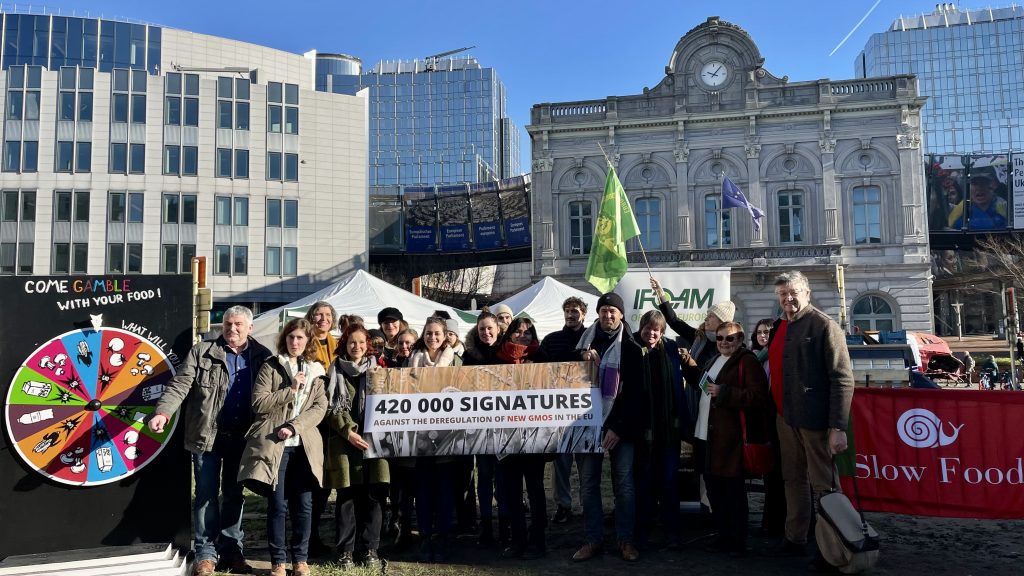

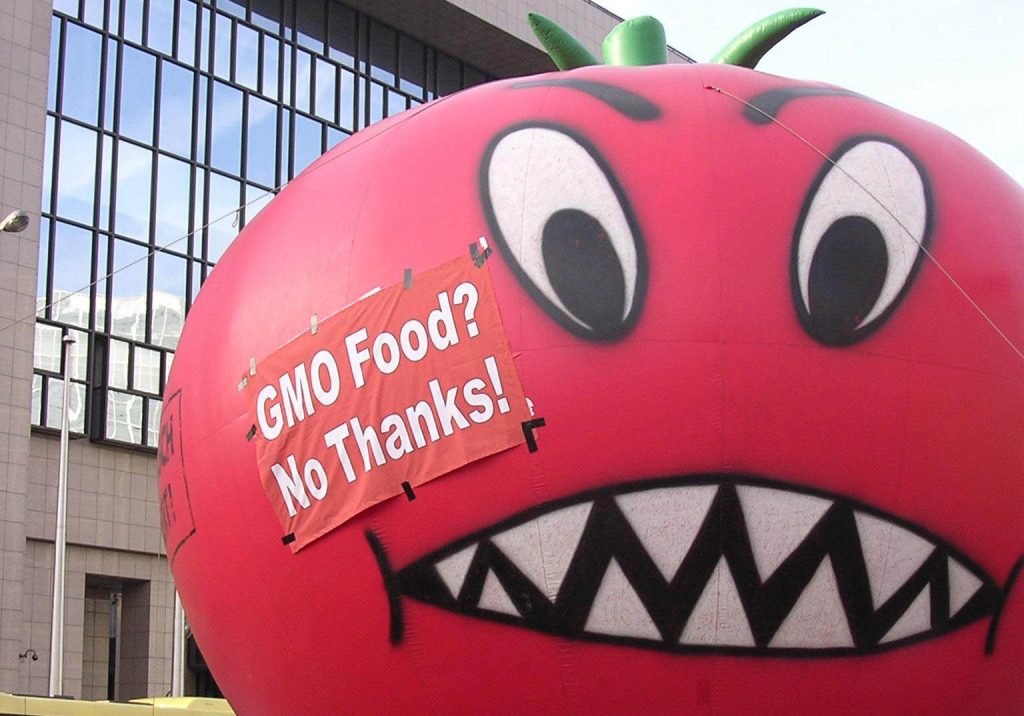
Brussels (Belgium) January 10, 2006 – US-based biotech giant, Monsanto, is aiming to genetically modify all of Europe’s maize over the next 4 years, reveals a new Friends of the Earth report released today. The report also concludes that in the ten years since the introduction of genetically modified (GM) foods in Europe, the biotech industry has failed to deliver any benefits for consumers or the environment, and has not played any role in solving hunger and poverty.
The Friends of the Earth report highlights that over the past 10 years Monsanto and its trade bodies have consistently worked to weaken European laws to protect consumers, the environment and farmers and that despite overwhelming public rejection in Europe, Monsanto and the biotech industry have an unacceptable influence over many parts of European food, research and agriculture policy. [1]
The report reveals that in November 2005 Monsanto announced to its investors that it sees Europe as a “Next Opportunity”. It highlighted that in the four years up to 2010 there is market potential to introduce 9.7 million hectares of its Roundup Ready maize and 8.2 million hectares of its YieldGard insect-resistant maize. In other words, it is targeting the whole of the European continent’s maize production. In addition, it is aiming to introduce 400,000 hectares of its GM soybeans. Monsanto has currently permission to grow only one type of insect-resistant maize in the EU.
However, despite Monsanto’s efforts, the Friends of the Earth report reveals that:
- There have been no new GM crops approved for cultivation in the EU since 1998, and despite 30 years of research and public money the industry has only delivered two GM traits: herbicide tolerance and insect resistance.
- Commercial growing on any scale in the EU is still limited to just Spain, and even there the number of GM events permitted has now been reduced to just one.
- The number of countries banning GM products has increased over recent years and the number of regions in Europe declaring themselves GM Free zones has grown to 165, with 4500 smaller areas declaring themselves also GM free. In November the Swiss voted in a referendum for a five year ban.
- Europeans continue to reject GM foods. European polls show that 70% of the public do not want to eat GM foods, and all major food manufacturers and retailers prohibit the use of GMOs in their products, in particular Monsanto’s GM soya.
- GM crops have failed to tackle hunger and poverty. Most GM crops are destined for animal feed, and none have been introduced to address hunger and poverty issues. GM crops in developing countries have been grown mainly as export cash crops, sometimes at the expense of local food production. Other developing countries, such as Indonesia and India, have experienced substantial problems with Monsanto’s GM crops, often leaving farmers heavily indebted. Monsanto continues to introduce aggressive royalty initiatives in South America to increase its profits.
Adrian Bebb, GM Campaigner for Friends of the Earth Europe said:
“Monsanto’s plans to take-over and genetically modify all maize production in Europe should be ringing alarm bells for farmers and consumers. It is crucial that Europe and its national Governments thwart Monsanto’s plans to control our food and countryside.”
“Our report shows that in the ten years since genetically modified crops were introduced we have seen crops fail in developing countries leaving poor farmers destitute, we’ve seen an increase in the use of pesticides and we’ve seen a small number of very big corporations buy up the world’s seed supply.”
Paul de Clerck, Friends of the Earth Europe’s corporate campaigner said:
“Monsanto has been in the driver’s seat as the US, Brazil and other countries developed their GM policies, and their influence has been obvious. In Paraguay and Brazil Monsanto’s GM products were grown even though they were forbidden, and in Indonesia the company was reduced to bribing government officials. Governments should stop serving the interests of big companies such as Monsanto and put the interests of their citizens and the environment first.”
***
Notes to editors:
[1] ‘Who benefits from GM crops?’ report and a fact sheet on GM crops can be found above