
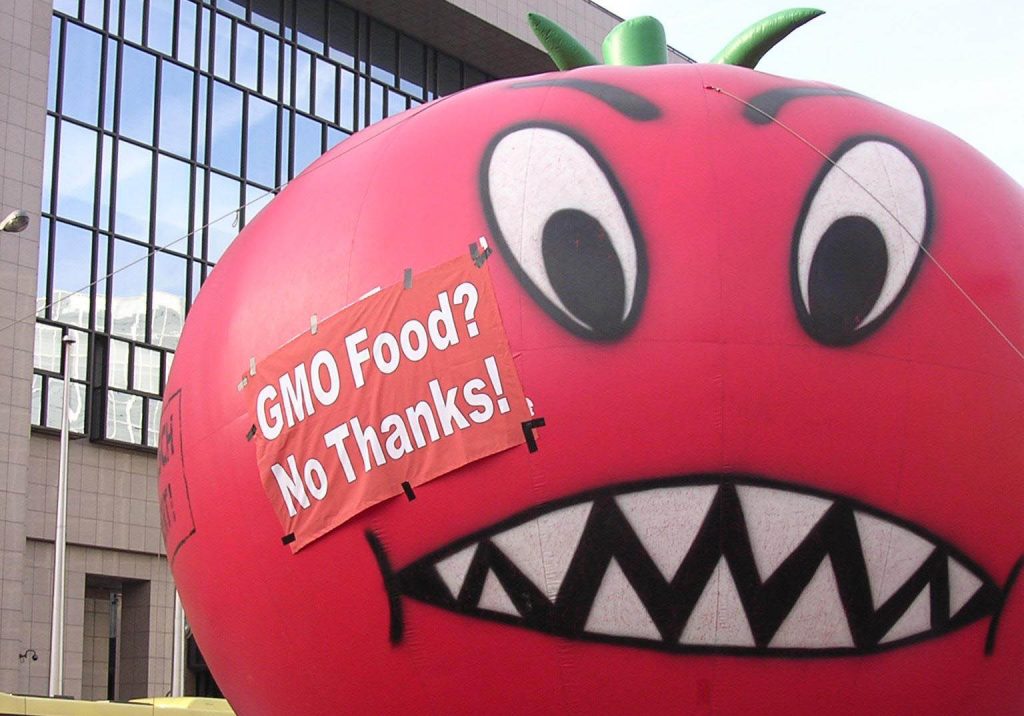
Brussels, 23 November 2007 – Friends of the Earth Europe today warned EU Farm Ministers not to slacken safety rules for imports of genetically modified organisms (GMOs). The issue is up for debate at the Agriculture Council on Monday and follows a lobbying campaign by the animal feed and biotechnology industries to persuade politicians that Europe could run out of animal feed as a result of the EU’s strict line on GMOs – an argument which Friends of the Earth Europe strongly disputes.
Helen Holder, GMO Campaign Co-ordinator at Friends of the Earth Europe said:
“The animal feed and biotech industries are deliberately spreading panic that the EU’s tough GMO standards are threatening Europe’s ability to feed its livestock. But these arguments are fatally flawed. The real reasons that animal feeds are becoming scarce are that land is being used to grow agrofuels and countries such as China are increasing their consumption of meat. The EU should not sacrifice its hard-won safety standards on the basis of illogical, scaremongering arguments from industry.”
The debate on Monday centres on industry arguments that:
-
the EU’s “zero tolerance” policy towards any contamination of imports with GMOs not approved as safe should be weakened, because it is harming trade with countries that grow GM crops and have widespread contamination.
-
the process for approving new GMOs should be sped up in line with the US.
Friends of the Earth Europe highlights that changes to the EU standards are not justified, because the threat of animal feed shortages is exaggerated and because rising feed prices are not caused by the EU’s strict GMO standards.
MAIZE
A report prepared by the European Commission’s DG Agriculture [1] clearly states that even if all countries currently exporting to the EU switched to growing GM maize crops not approved as safe in Europe, the EU could feed its animals with home-grown maize or from imports from other countries instead. And the EU’s capacity for growing cereals is even greater since the European Commission agreed that farmers are not obliged to set aside land under the Common Agricultural Policy (CAP) in 2007 or 2008.[2]
SOY
The price of soy is rising, not as a result of the EU’s zero tolerance policy on GMOs, but instead because less soy is being grown for feed as more land is used to grow agrofuels – also known as biofuels. For example, the amount of land used by the United States – the world’s biggest soybean producer, to grow soybeans fell by over 15 percent in 2007 due to American farmers growing maize for agrofuels instead.[3]
At the same time, the total consumption of soy-based animal feeds (soy meal/cake) is increasing by 5 percent (5 million tonnes) per year as Asian and Chinese livestock production increase to meet new demands for meat. Global supplies of soy-based feeds are decreasing by 2 percent per year. [4]
(The EU is limited in its capacity to produce protein crops by the Blairhouse Agreement with the United States which results in the EU having to import 70 percent of its plant protein).[5]
As a solution Friends of the Earth Europe is calling for the EU to:
- drop its proposals for increasing the use of agrofuels in transport
- reform the EU livestock industry to decrease its demand on protein from abroad
- address international trade issues that constrain the EU to import plant protein from abroad
- maintain zero tolerance to GMO contamination
The WTO ruling on the GMO dispute did not question the right to strict biosafety legislation nor the right of countries to ban individual GMOs.
***
NOTES:
[1] http://ec.europa.eu/agriculture/envir/gmo/economic_impactGMOs_en.pdf
[2] European Commission press release IP/07/1101. Environmental groups are however concerned about the negative impact this proposal will have on biodiversity.
[3] FAO Food Outlook, November 2007
[4] FAO Food Outlook, November 2007
[5] Agreement first established in 1966, restructured since to Blairhouse Agreement: http://stats.oecd.org/glossary/detail.asp?ID=222